Global Japanese Sushi Rolls
Highlighted under: Earth Eats Recipes
I absolutely love making sushi at home, and these Global Japanese Sushi Rolls are my go-to recipe. They allow me to experiment with different fillings and flavors, showcasing how versatile sushi can be. Every time I prepare them, I can't help but get creative with the ingredients, from fresh fish to vibrant vegetables. The satisfaction of rolling my own sushi and achieving that perfect bite is unbeatable. I often serve these rolls at gatherings, and they always impress family and friends alike. Trust me, once you try this recipe, you'll be hooked!
I still remember the first time I rolled sushi; it was messy, but the taste was extraordinary. Experimenting with fresh ingredients like avocado, crab, and even mango has transformed the way I think about sushi. I learned that using a bamboo mat helps create perfect rolls, and adding a touch of rice vinegar to my sushi rice elevates the flavor significantly.
Over time, I’ve discovered how crucial it is to have all your ingredients prepped before starting. This not only streamlines the process but also allows for more creativity while rolling. When I host sushi nights, everyone loves customizing their rolls, making it a fun and interactive experience!
Why You'll Love These Rolls
- Endless filling combinations to suit every palate
- Fresh ingredients make every bite a flavor explosion
- A fun activity to enjoy with family and friends
Mastering Sushi Rice
The sushi rice is the heart of any sushi roll, and mastering its preparation is crucial for achieving that authentic texture. After rinsing the rice, it’s essential to let the rice cooker work its magic, as cooking on too high a heat can lead to uneven grains. For best results, make sure the rice is fully hydrated before cooking, which usually takes about 30 minutes to soak. The ideal sushi rice should be sticky yet firm, allowing it to hold its shape when rolled.
Once your rice is cooked, mixing in the vinegar, sugar, and salt should be done while the rice is still warm. This helps the seasonings absorb better, giving your sushi a delightful tangy flavor. Use a wooden spatula to gently fold the ingredients in, taking care not to smash the grains. Aim for a glossy finish, as this indicates the rice is well-seasoned. If you notice your rice becoming too sticky, adding a minute splash of rice vinegar can help balance the texture.
Choosing and Preparing Fillings
When it comes to fillings, think about balance between flavors and textures. Fresh fish like salmon or tuna should be sushi-grade to ensure safety, and I always recommend checking for quality at your local fish market. For a creamy texture, consider using cream cheese, which blends beautifully with avocado and adds richness. If you’re sourcing vegetables, choose firm, crunchy options like cucumber and carrots to contrast with the soft rice and fish, giving each bite a satisfying crunch.
For those with dietary restrictions, there are plenty of options to make delicious sushi rolls. You can replace fish with marinated tofu or serve up a vibrant vegetable roll filled with peppers, sprouts, and radishes. When using pickled ginger, not only does it add a lovely zing, it also acts as a palate cleanser between bites, enhancing your sushi experience. Don’t be afraid to experiment and find combinations that excite your taste buds!
Ingredients
Gather Your Ingredients
Sushi Rice Ingredients
- 2 cups sushi rice
- 2 1/2 cups water
- 1/4 cup rice vinegar
- 2 tablespoons sugar
- 1 teaspoon salt
Fillings
- Fresh fish (salmon, tuna, or imitation crab)
- Avocado, sliced
- Cucumber, julienned
- Cream cheese, optional
- Pickled ginger, for serving
- Soy sauce, for serving
For Rolling
- Nori sheets
- Bamboo sushi mat
Prepare Ahead

Instructions
Steps to Prepare Your Sushi Rolls
Prepare the Sushi Rice
Rinse the sushi rice under cold water until the water runs clear. Combine the rice and water in a rice cooker and cook according to the cooker instructions. Once it’s done, let it sit for 10 minutes, then mix in the rice vinegar, sugar, and salt.
Assemble the Roll
Lay a sushi mat on a flat surface and place a sheet of nori on top, shiny side down. Spread a thin layer of sushi rice over the nori, leaving a 1-inch border at the top. Arrange your chosen fillings in a line across the middle of the rice.
Roll It Up
Using the sushi mat, gently roll the nori away from you, pressing it tightly while rolling. When you reach the border, wet it with a little water to seal the roll. Use a sharp knife to slice the roll into bite-sized pieces.
Serve and Enjoy
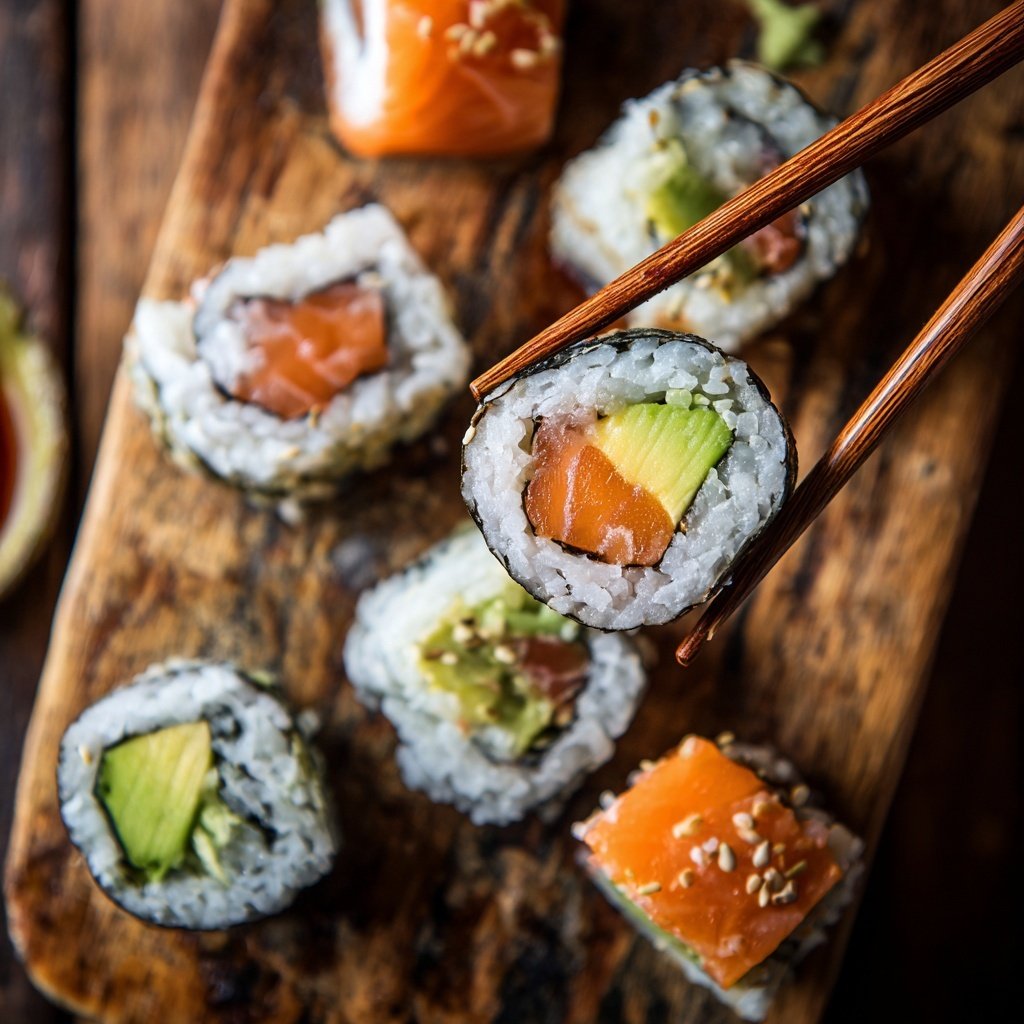
Arrange the sushi rolls on a platter with pickled ginger and soy sauce on the side. Enjoy your homemade sushi!
Sushi Night Ready!
Pro Tips
- Make sure to use sushi-grade fish for safety. Experiment with different combinations of vegetables and sauces to find your favorite flavors.
Rolling Techniques
Rolling sushi is an art that takes practice, but it can be mastered with these techniques. Start by keeping the nori sheet taut, which prevents any gaps that could lead to a dislodged roll. Ensure to apply an even pressure while rolling, using the bamboo mat as a guide. If the nori tears during rolling, it may be too dry; lightly dampening the sheet may help with pliability and prevent breakage.
Don’t rush the rolling process. Take your time to make sure the fillings are snugly wrapped. If making multiple rolls, you can keep the completed ones covered with a damp cloth to prevent drying out. When it comes to slicing, use a sharp, wet knife to avoid squishing the roll; a clean cut shows off the beautiful colors of the fillings inside.
Serving and Storing Sushi
Once your sushi is rolled and cut, presentation can elevate the experience. Arrange sushi pieces in a circular pattern on your serving platter, alternating the colors to make them visually appealing. Serve alongside small dishes of soy sauce and wasabi to allow guests to customize each bite. Adding a side of pickled ginger not only adds flavor but also complements the sushi wonderfully, enhancing the overall dining experience.
If you have leftovers, sushi is best enjoyed fresh, but should you need to store it, wrap the rolls tightly in plastic wrap and refrigerate. Consume them within 24 hours to relish the best flavors. Freezing sushi is not usually recommended as it can alter texture, particularly the rice. However, components like cooked fish or vegetables can be prepared ahead and assembled fresh when ready to serve, making your assembly time quicker!
Questions About Recipes
→ Can I use brown rice instead of sushi rice?
While brown rice can be used, it may alter the texture and taste of your sushi. Sushi rice is sticky and designed for rolling.
→ What if I can't find nori?
You can try using rice paper as an alternative, but it will change the flavor and texture of the sushi rolls.
→ How far in advance can I prepare the sushi rice?
Sushi rice is best used on the same day it's prepared, but you can store it in the refrigerator for up to 24 hours in an airtight container.
→ What are good vegetarian alternatives?
You can fill your rolls with ingredients like cucumber, avocado, carrots, and tempura vegetables for a delicious vegetarian sushi roll.
Global Japanese Sushi Rolls
Created by: The Chefromankitchen Team
Recipe Type: Earth Eats Recipes
Skill Level: Intermediate
Final Quantity: 4 rolls
What You'll Need
Sushi Rice Ingredients
- 2 cups sushi rice
- 2 1/2 cups water
- 1/4 cup rice vinegar
- 2 tablespoons sugar
- 1 teaspoon salt
Fillings
- Fresh fish (salmon, tuna, or imitation crab)
- Avocado, sliced
- Cucumber, julienned
- Cream cheese, optional
- Pickled ginger, for serving
- Soy sauce, for serving
For Rolling
- Nori sheets
- Bamboo sushi mat
How-To Steps
Rinse the sushi rice under cold water until the water runs clear. Combine the rice and water in a rice cooker and cook according to the cooker instructions. Once it’s done, let it sit for 10 minutes, then mix in the rice vinegar, sugar, and salt.
Lay a sushi mat on a flat surface and place a sheet of nori on top, shiny side down. Spread a thin layer of sushi rice over the nori, leaving a 1-inch border at the top. Arrange your chosen fillings in a line across the middle of the rice.
Using the sushi mat, gently roll the nori away from you, pressing it tightly while rolling. When you reach the border, wet it with a little water to seal the roll. Use a sharp knife to slice the roll into bite-sized pieces.
Arrange the sushi rolls on a platter with pickled ginger and soy sauce on the side. Enjoy your homemade sushi!
Extra Tips
- Make sure to use sushi-grade fish for safety. Experiment with different combinations of vegetables and sauces to find your favorite flavors.
Nutritional Breakdown (Per Serving)
- Calories: 300 kcal
- Total Fat: 5g
- Saturated Fat: 1g
- Cholesterol: 30mg
- Sodium: 200mg
- Total Carbohydrates: 56g
- Dietary Fiber: 2g
- Sugars: 1g
- Protein: 8g